Home › Commercial Concrete Contractor Services
Partner with an experienced commercial concrete contractor in Phoenix, AZ for your next project. We handle foundations, slabs, parking lots, and site concrete for offices, retail, and industrial facilities. Our team focuses on scheduling, coordination, and quality control to keep your project moving on time.
Superior Concrete Phoenix provides professional concrete contractor throughout Phoenix, AZ, Arizona and the surrounding area. Our licensed, insured crew delivers safe, clean, on-time work with a free estimate before anything begins. Call (928) 756-4158 or request your free quote.
Commercial Concrete Built For Phoenix Conditions
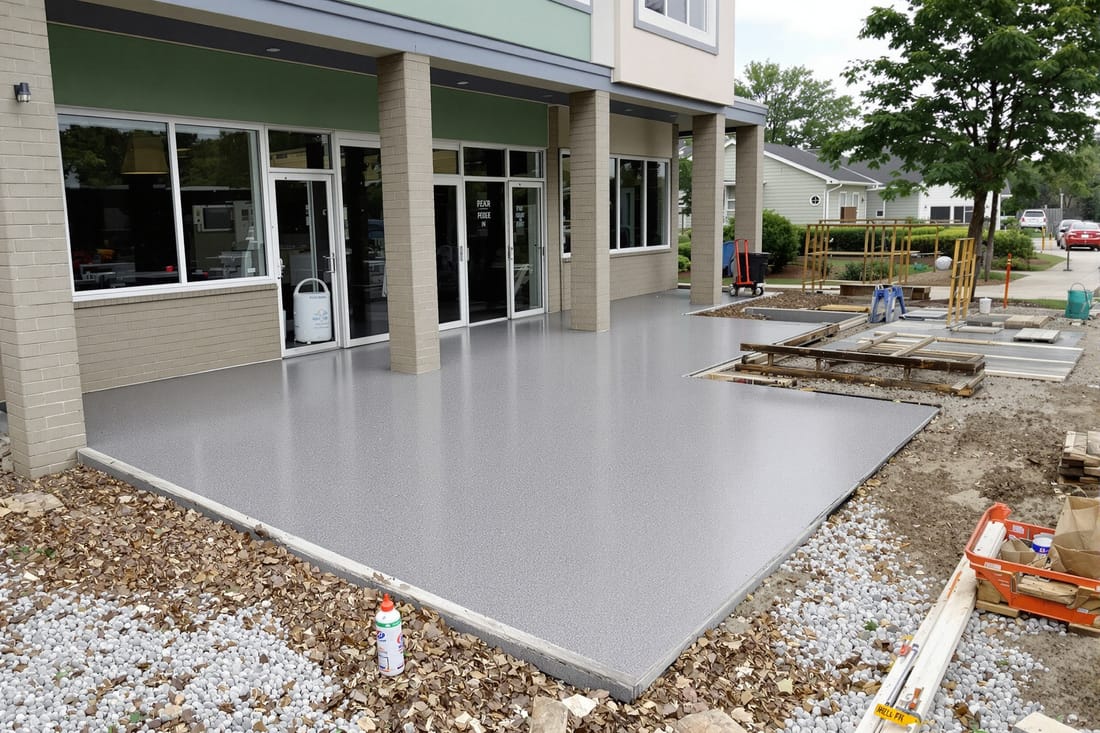
Commercial concrete work in Phoenix is not just about pouring gray slabs. Our heat, monsoon rains, and caliche soils put a lot of stress on flatwork, foundations, and drive lanes. Superior Concrete Phoenix focuses on commercial projects that have to handle heavy use, long hours of sun exposure, and wide temperature swings without cracking apart or settling.
When we look at a commercial concrete job, we start by asking how the pavement or structure will be used. A restaurant patio, a warehouse slab, and an apartment parking lot all need different concrete mixes, reinforcement, and joint layouts. We match concrete strength, fiber content, rebar size, and thickness to the actual traffic loads you expect, not a one-size-fits-all standard. This is what keeps forklifts from breaking slab edges and delivery trucks from rutting parking areas.
Phoenix soil varies from tight caliche to sandy fill. Before we bid a project, we look at your soils report if there is one, or arrange basic probing and compaction tests. Poor base preparation is the main reason commercial concrete fails early. We will tell you up front if subgrade replacement, added base rock, or moisture conditioning is needed so you can budget correctly and avoid surprise change orders halfway through construction.
Timing is also critical in this climate. In summer, mid-day placements can cause rapid surface drying and plastic shrinkage cracking. We often plan early morning or night placements for larger commercial pours, and we adjust set times with admixtures suited to high-heat environments. This keeps finish quality high and reduces curl and dusting over the first few years of use.
How Our Commercial Concrete Process Works
Every commercial concrete project with Superior Concrete Phoenix follows a clear step-by-step process that keeps your site usable and your schedule on track.
1) Site review and layout: We walk the site with your GC, property manager, or facilities lead. We confirm grades, drainage paths, vehicle approaches, and tie-in points to existing pavement or structures. For retail centers and occupied properties, we also plan access routes and phased work so tenants can keep operating.
2) Subgrade and base prep: We strip organic material and any weak asphalt or concrete. Subgrade is compacted with plate tampers or rollers to the density required by plan or local standards. If your soils are expansive or loose, we install a compacted aggregate base (often 4 to 8 inches thick) to create a uniform platform. For dumpster pads, drive-thrus, and loading docks, we often increase base thickness or use larger aggregate to handle point loads.
3) Forming and reinforcement: We set forms to line and grade using string lines or laser levels. For parking lots and drive lanes we typically use doweled construction joints so repairs can be made later without random cracking. Reinforcement can include rebar mats, dowels, welded wire mesh, or structural fibers. For warehouse floors we often use a combination of rebar at column lines and heavy fiber in the slab field to control cracking.
4) Concrete placement and finishing: We order mix designs that match your specs and job needs, including psi rating, slump (workability), and any admixtures for hot weather, accelerated set, or reduced shrinkage. During placement we use vibrators where needed, then screed and bull float to get a flat surface. For exterior flatwork like parking lots, we usually apply a broom finish for traction. Interior commercial slabs may receive machine trowel finishes or densifier treatments if you need a polished, dust-resistant surface later.
5) Joints, curing, and protection: We saw control joints on a schedule based on slab thickness and dimensions, usually within 6 to 18 hours depending on conditions. Proper joint spacing is what keeps shrinkage cracks from wandering across the surface. We then cure the slab with curing compound or wet cover to prevent rapid moisture loss. Barricades, caution tape, and signage are used so vehicles and foot traffic do not damage the concrete before it reaches design strength.
Cost Drivers and Ways Phoenix Owners Can Control Budget
Commercial concrete pricing in Phoenix is shaped by more than just square footage. When Superior Concrete Phoenix prepares a proposal we break down the main drivers so you can see where cost comes from and where you have real options.
Slab thickness and reinforcement are big factors. A 4 inch sidewalk with light reinforcement is far less expensive per square foot than an 8 inch dumpster pad with rebar on a tight grid. Loading docks, fire lanes, and heavy truck routes usually require thicker concrete and stronger subgrade prep. If your plans are not finalized, we can show you where thicker concrete adds value and where it may be overkill.
Access and phasing matter in busy Phoenix commercial areas. Tight sites in downtown or older shopping centers may need smaller trucks, concrete pumping, or night pours to avoid disrupting traffic. Each of these adds labor and equipment costs. On the other hand, large open sites with good truck access, like industrial parks on the edge of town, often benefit from volume pricing when we can schedule long continuous pours.
Existing conditions can add hidden costs if they are not addressed early. Old pavement, buried debris, unmarked utilities, or soft, saturated areas from irrigation leaks can interrupt the schedule and require change orders. We typically recommend at least a limited test excavation or ground scan for older properties so those risks are reduced. Fixing drainage and unstable subgrade before the pour nearly always costs less than repairing failed concrete a few years later.
Schedule also affects cost. Spring and fall are popular for commercial concrete work in Phoenix because temperatures are moderate, which means contractors are busy. If your project schedule is flexible, we can sometimes secure better pricing by planning work slightly outside peak weeks or by grouping your job with other work in the same area to reduce mobilizations.
Common Commercial Concrete Issues We Solve In Phoenix
Commercial property owners in Phoenix see certain concrete problems again and again. Superior Concrete Phoenix designs new installations and repairs with these local issues in mind.
One of the most common issues is random cracking and joint spalling in parking lots and drive lanes. This often happens when control joints are spaced too far apart, sawed too late, or when heavy vehicles cut tight corners over thin slab edges. We prevent this by tightening joint spacing, using dowels between panels at heavy traffic areas, and thickening concrete at turning radii and dumpster enclosures where trucks grind the surface.
Another frequent problem is poor drainage. Standing water at entries and in ADA paths creates safety hazards and shortens the life of the concrete. In Phoenix monsoon storms, even a small low spot can hold water for days. When we design commercial flatwork, we run level checks and laser grades to ensure positive drainage toward inlets, scuppers, or landscape areas. If needed, we will recommend added surface drains or minor grading changes so the new concrete works with your existing storm system instead of against it.
Heat-related surface wear is also a factor here. Direct sun and hot tires can cause lighter duty slabs to ravel or polish smooth over time, especially in high-traffic retail lots. We address this by choosing the right air content, aggregate hardness, and finish type for exterior surfaces. A standard broom finish, sometimes paired with surface hardeners at entrances, gives better grip for pedestrians and resists glazing.
For interior commercial slabs, such as warehouses, shops, or medical offices, joints can curl or edges can chip under forklift or cart traffic. We look at rack layouts, wheel paths, and column lines, then lay out joints so they do not fall directly under wheel tracks when possible. We can also recommend joint filler systems and surface treatments that reduce dusting and make cleaning easier in Phoenix's dusty environment.
What To Decide Before Hiring a Phoenix Commercial Concrete Contractor
Before you bring a concrete contractor onto your Phoenix commercial site, it helps to clarify a few key points so you get accurate bids and a final result that fits your long-term plans.
First, define the real use and expected life span of the concrete areas. Are you planning a long-term hold on a distribution center, or improving a retail strip center for sale in a few years? If you expect to see regular semi-truck traffic, future tenant improvements, or frequent deliveries, tell us that up front. Superior Concrete Phoenix can then align mix designs, thickness, and reinforcement to your long-term goals instead of just meeting the bare minimum of code.
Second, gather any existing documents, even if they are old: site plans, previous soils reports, as-built drawings, and utility maps. These help us anticipate subgrade needs, drainage tying, and potential conflicts. If you do not have them, we can work with your engineer or recommend one familiar with Phoenix standards and local review agencies.
Third, consider how much disruption your site can handle. A busy medical office, school campus, or supermarket needs careful staging so patients, parents, or customers can get in and out. We will ask about your peak hours, delivery windows, and security requirements, then propose phased work areas, temporary signage, and alternative access routes.
Last, ask your contractor specifically about local experience and quality controls, not just total years in business. For each commercial project we take on, we assign a lead foreman who has worked in Phoenix for years and knows how fast concrete will set on a 110 degree afternoon, how to protect fresh work from blowing dust, and how local inspectors for Phoenix, Tempe, Mesa, and surrounding jurisdictions prefer things detailed. We are glad to walk you through our planned mix designs, joint layouts, and curing methods before you sign a contract, so you know exactly how your commercial concrete will be built to last in Arizona conditions.